


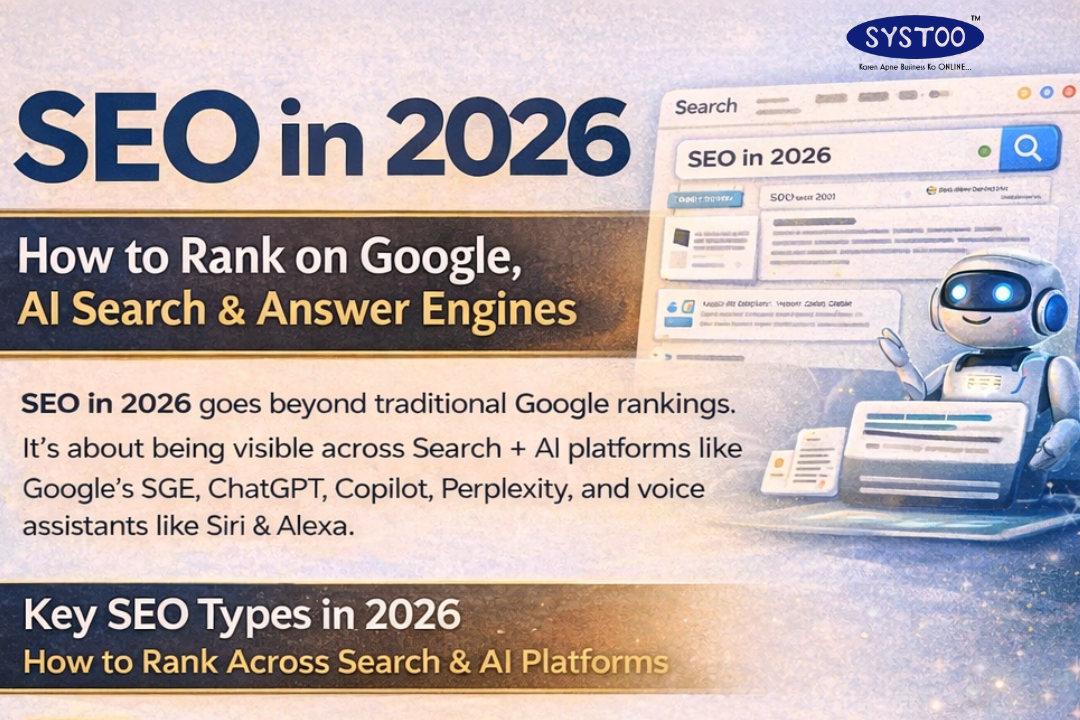
SEO in 2026 is no longer limited to ranking blue links on Google. Search behavior has changed dramatically. Users now discover brands through AI tools like ChatGPT, Perplexity, Copilot, voice assistants, Google’s Search Generative Experience (SGE), YouTube, Instagram, and Maps.
If your SEO strategy still focuses only on keywords and backlinks, you’re already behind.
In this guide, you’ll learn all major SEO types in 2026, explained in simple language, and how to optimize your website to rank across Google Search + AI-powered platforms.
Why SEO Has Changed in 2026
Search engines are no longer just “search engines.” They are answer engines.
Instead of showing 10 blue links, platforms now:
Generate AI-written answers
Pull data from trusted websites
Recommend brands directly
Answer voice queries instantly
This shift has given rise to new SEO formats beyond traditional optimization.
AIO – AI Optimization
AI Optimization (AIO) focuses on making your website understandable and trustworthy for AI tools like ChatGPT, Copilot, Gemini, and Perplexity.
How to Optimize for AIO:
Write clear, factual, well-structured content
Use headings, bullet points, and definitions
Build topical authority (not random blogs)
Publish expert-backed and experience-driven content
AI tools prefer websites that are easy to summarize and verify.
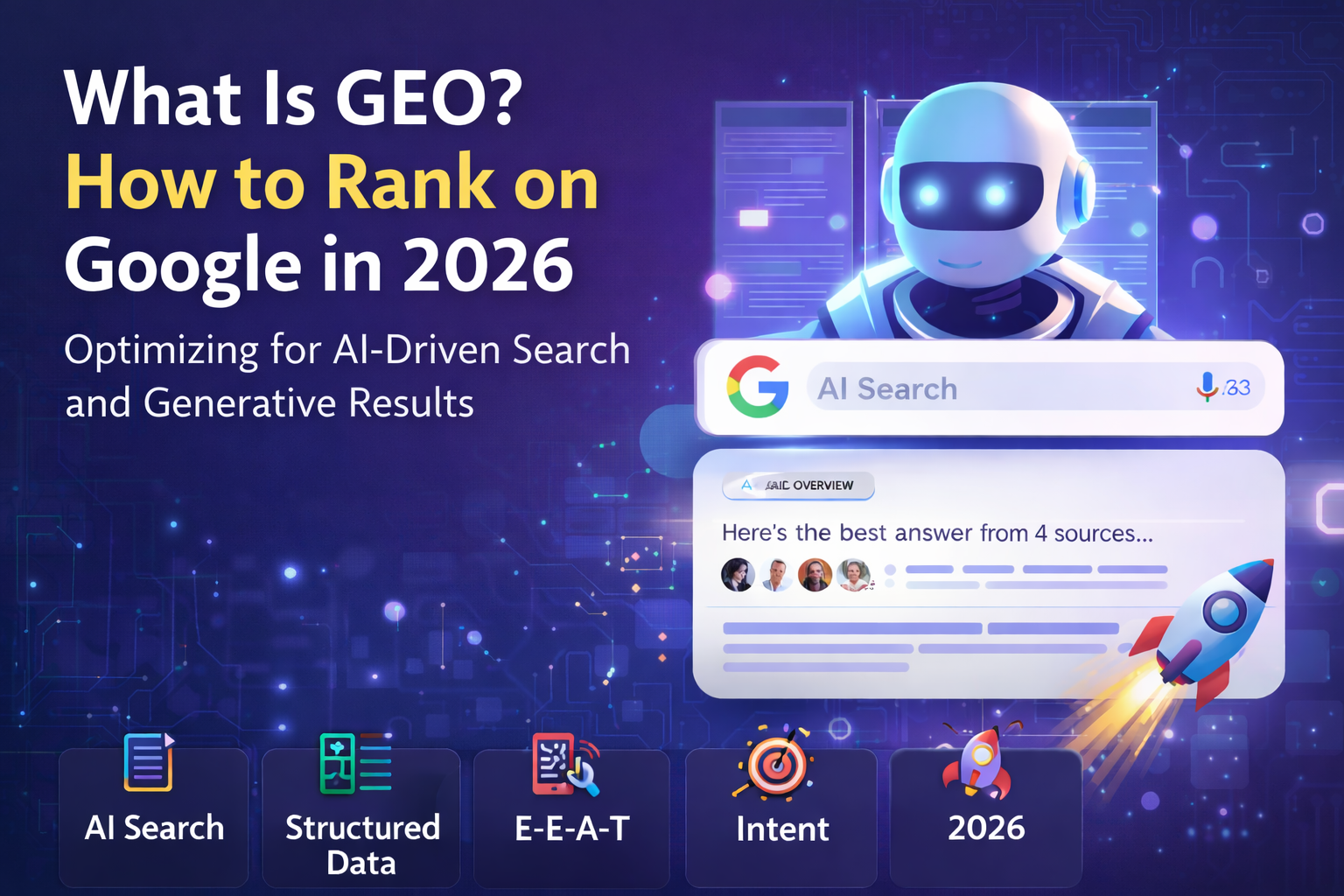
GEO – Generative Engine Optimization
Generative Engine Optimization (GEO) helps your content appear inside AI-generated answers, especially in Google’s SGE.
GEO Best Practices:
Answer search queries directly
Use question-based headings
Add concise summaries under sections
Create comparison and how-to content
The goal is not clicks—but being cited by AI.
AEO – Answer Engine Optimization
Answer Engine Optimization (AEO) ensures your content appears in:
Featured snippets
People Also Ask
Voice assistant answers
How to Win AEO:
Provide short, precise answers
Use FAQ sections
Target long-tail and conversational keywords
Format content in Q&A style
This is essential for zero-click searches.
SXO – Search Experience Optimization
SXO blends SEO with user experience.
Google now ranks pages based on how users interact, not just keywords.
SXO Optimization Checklist:
Fast loading pages
Mobile-first design
Clear navigation
Engaging visuals
Low bounce rate
Better experience = higher rankings.
VSO – Voice Search Optimization
Voice searches are growing rapidly with Alexa, Siri, and Google Assistant.
Optimize for Voice Search:
Write content like people speak
Target “near me” and question-based queries
Use natural language
Answer in 20–30 word responses
Voice SEO is crucial for local and service-based businesses.
EEAT – Experience, Expertise, Authoritativeness & Trustworthiness
Google now prioritizes who is writing the content, not just what is written.
Strengthen EEAT:
Show author credentials
Share real experience and case studies
Add reviews, testimonials, and mentions
Keep content accurate and updated
EEAT is the backbone of SEO success in 2026.
LSEO – Local SEO
Local SEO helps businesses rank for searches like:
“best service near me”
“top café in Kanpur”
Local SEO Must-Haves:
Optimized Google Business Profile
Local keywords
NAP consistency
Reviews and local content
Local SEO drives high-intent traffic and conversions.
Video SEO – The Fastest Growing SEO Channel
Video content now ranks on:
Google Search
YouTube
Instagram
TikTok
Video SEO Tips:
Optimize titles, descriptions, and captions
Use keywords in spoken content
Add subtitles
Create short-form and long-form videos
If you’re not doing video SEO, you’re missing massive visibility.
How to Build a Winning SEO Strategy in 2026
To rank on Google and AI platforms, your strategy must include:
Traditional SEO + AI SEO
Human-first content
Topical authority
Multi-format content (text, video, FAQs)
Strong brand signals
SEO in 2026 is about visibility everywhere, not rankings alone.
Final Thoughts
SEO is evolving—but the goal remains the same: be the best answer.
Brands that adapt to AIO, GEO, AEO, SXO, VSO, EEAT, Local SEO, and Video SEO will dominate both Google and AI-driven search results.
If you want long-term growth, now is the time to future-proof your SEO strategy.


Comments (0)