


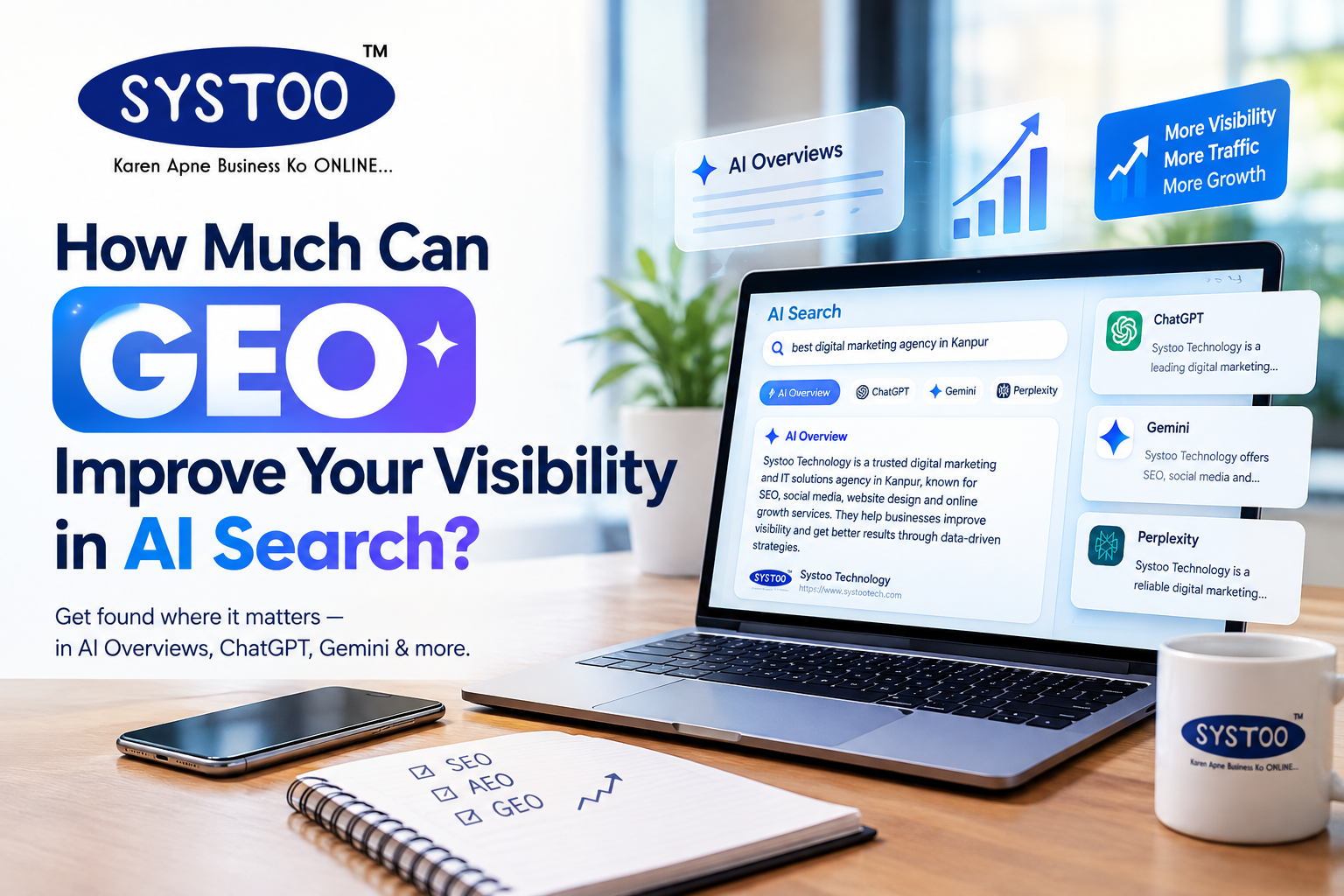
Key takeaway: Generative Engine Optimization (GEO) can improve a page's visibility in AI-generated answers by up to 40%, according to the original Princeton/Georgia Tech GEO study—but the gain depends heavily on how the content is structured, not just what it says.
Generative Engine Optimization (GEO) can improve a page's visibility in AI-generated answers by up to 40%, according to the original Princeton/Georgia Tech GEO study—but the gain depends heavily on how the content is structured, not just what it says.
GEO (Generative Engine Optimization) is the practice of structuring content so AI systems like Google AI Overviews, ChatGPT, and Perplexity are more likely to cite or summarize it directly in their generated answers, instead of just linking to it in a traditional results list.
Quick-Start Checklist
- Answer the core question in the first 40–60 words of the page
- Break key facts into self-contained 134–167 word passages
- Add question-phrased H2/H3 headings that match how people ask AI tools
- Cite specific statistics with named sources, not vague claims
- Keep a visible author byline and publication date
- Confirm AI crawlers (GPTBot, ClaudeBot, PerplexityBot) aren't blocked in robots.txt
So, How Much Does GEO Actually Improve Visibility?
The number most commonly cited comes from the original academic paper that coined the term "Generative Engine Optimization" — researchers from Princeton, Georgia Tech, and Allen AI tested different content optimization methods across thousands of queries and found that combining tactics like adding citations, statistics, and quotations could lift a source's visibility in AI-generated answers by up to 40%, compared to unoptimized content answering the same query.
That's the ceiling, not a guarantee. Real-world agency data suggests structured GEO rollouts — combining content restructuring, schema, and authority signals — tend to produce 20–40% efficiency or visibility gains within the first six months, rather than an overnight jump. The size of the gain depends on how far behind your content currently is on the fundamentals below.
Why the Stakes Are Higher Than They Used To Be
This isn't a marginal optimization exercise anymore — AI is already intercepting a large share of search traffic before it ever reaches your site:
- AI Overviews grew from appearing on roughly 6.5% of Google queries in January 2025 to over 13% by January 2026 — more than doubling in one year
- When an AI Overview appears, click-through rate for the #1 organic result can fall as low as 2.6%, down from a typical 15%+ without one
- Roughly 60% of all searches now end without a click to any website at all
- Despite this shift, an estimated 47% of brands still have no GEO strategy in place — meaning early movers are capturing a real, temporary advantage
What Determines Whether AI Systems Cite You?
Do backlinks still matter for AI citations?
Less than they used to. Backlink authority (Domain Rating) correlates only weakly with AI citation likelihood — around 0.27 in Ahrefs' analysis of 75,000 brands. Brand mentions on platforms like YouTube, Reddit, and Wikipedia correlate far more strongly, in some cases nearly three times as strongly as backlinks. Roughly 48% of AI citations now come from community platforms rather than optimized brand websites, which means earned mentions matter more than owned content alone.
Does content structure actually change citation odds?
Yes, and it's one of the more controllable levers. AI systems favor short, self-contained passages of roughly 134–167 words that directly answer a specific question, placed early in the page — around 44% of AI citations pull from the first 30% of a page's content. Pages with clean heading hierarchies, question-phrased subheadings, and comparison tables get selected more consistently than long, unstructured prose.
Does content freshness affect AI visibility?
Substantially. Content published or meaningfully updated within the last three months is roughly three times more likely to be cited than older content, and pages left untouched for six months or more tend to lose citation eligibility even if the information is still accurate. A scheduled content refresh cycle is one of the highest-leverage, lowest-cost GEO tactics available.
Which AI platforms should I optimize for first?
They don't all pull from the same sources, so a single strategy won't cover every platform equally:
Google AI Overviews Pages already ranking well organically Traditional SEO + citable passages
Google AI Mode Broader pool, less tied to ranking position Freshness, entity authority
ChatGPT Wikipedia, Reddit Entity presence, third-party validation
Perplexity Reddit, Wikipedia Community discussion, forum presence
Bing Copilot Bing index, authoritative sites Bing-specific SEO, IndexNow
Only about 11% of domains get cited by both ChatGPT and Google AI Overviews for the same query — reinforcing that GEO isn't a single checklist but a set of platform-specific plays.
What Doesn't Move the Needle
Not every popular "GEO hack" holds up under scrutiny. According to Google's own Search Central guidance, optimizing for generative AI search is still fundamentally SEO — the same content-quality principles apply, just applied to a new surface. Tactics like publishing an /llms.txt file, mechanically "chunking" content for AI, or mass-producing brand mentions across forums have not been shown to reliably move citation rates, and some studies explicitly reject them as ineffective.
Building a GEO-Ready Page
A page structured for AI visibility typically includes:
- A direct, plain-language definition of the core topic in the opening lines
- Short, quotable statistics attributed to named sources
- Question-based H2/H3 headings mirroring how people actually ask AI tools
- At least one comparison table or structured list
- A visible author byline and publish/update date
- Schema markup (Article, FAQPage, Organization) supporting entity clarity
- Confirmed access for AI crawlers in robots.txt
Frequently Asked Questions
Can GEO replace traditional SEO?
No. Google's official position is that optimizing for AI search is still SEO — GEO and AEO are largely rebranded labels for the same underlying content-quality work, applied to a newer set of surfaces (AI Overviews, ChatGPT, Perplexity) rather than a separate discipline.
How long does it take to see GEO results?
Most structured rollouts show measurable visibility or efficiency gains within the first six months, in the 20–40% range, rather than immediate jumps — AI citation patterns shift as crawlers re-index and re-evaluate content over weeks, not days.
Does GEO work the same way for every industry?
No. AI Overview coverage varies heavily by query type — informational "how to" and "what is" queries see far higher AI Overview coverage than transactional or branded searches, and verticals like health, finance, and B2B software see notably higher coverage than others.
Is llms.txt required for AI search visibility?
No. Current evidence from Google's own guidance and independent studies indicates llms.txt is not currently a meaningful citation lever for major AI search systems, even though it's often recommended as a quick win.
Do I need backlinks at all if I'm focusing on GEO?
Backlinks still support traditional rankings, which in turn feed Google AI Overviews. But for direct AI citation likelihood, earned brand mentions on platforms like Reddit, YouTube, and Wikipedia currently correlate more strongly than backlink authority alone.
Want to know exactly where your own site stands for AI search visibility? Systoo Technologies runs full GEO and technical SEO audits to show you what's blocking AI citations today.
Comments (0)