


Quick Summary
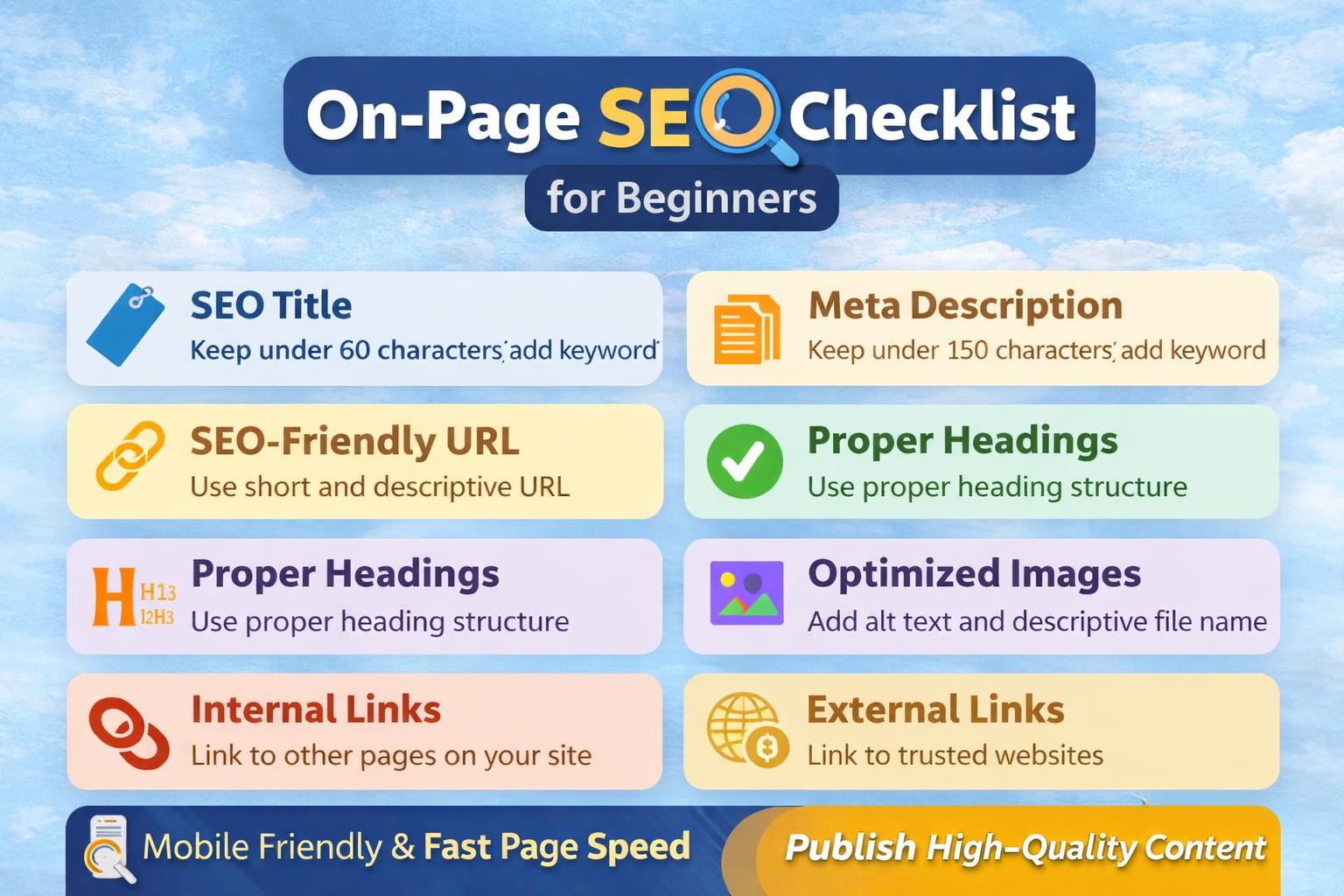
On-page SEO is the process of optimizing individual web pages to improve their visibility in search engines and AI-powered search platforms. This beginner-friendly checklist explains the essential steps, including keyword optimization, title tags, meta descriptions, headings, internal linking, image optimization, page speed, schema markup, and mobile-friendliness, to help improve rankings and user experience in 2026.
On-page SEO is the practice of optimizing the content, HTML elements, images, and internal links of a webpage so search engines like Google and AI search systems can better understand and rank your content.
1. Use a Proper SEO Title (Meta Title)
Your title tag is one of the most important ranking factors.
Best Practices
✔ Keep it under 60 characters
✔ Include your primary keyword
✔ Make it clear and clickable
Example
Bad:
Blog about Holi
Good:
Best Holi Events in Kanpur 2026 | Complete Guide
2. What is an SEO Meta Description?
Meta descriptions improve click-through rate (CTR) in Google search results.
Best Practices
✔ Keep it under 150–160 characters
✔ Include your main keyword
✔ Make it attractive
Example
Discover the best Holi events in Kanpur 2026, including resort parties, DJ nights, and ticket details.
3. How Do You Create an SEO-Friendly URL?
A clean URL helps Google understand your page.
Best Practices
✔ Use short URLs
✔ Include your main keyword
✔ Avoid numbers and unnecessary words
Example
Bad URL
website.com/page?id=123
Good URL
website.com/holi-events-kanpur-2026
4. Use Proper Heading Structure
Headings improve readability and SEO.
Structure
H1 → Page Title
H2 → Main Sections
H3 → Subtopics
Example
H1: Best Holi Events in Kanpur 2026
H2: Top Holi Parties in Kanpur
H3: Rang Tarang Fiesta at Blueworld Park
5. Where Should You Use Your Target Keyword?
Include your keyword in:
✔ Title
✔ First 100 words
✔ Headings
✔ URL
✔ Image alt text
Example Keywords
-
Holi events in Kanpur
-
Holi party Kanpur 2026
-
Best Holi celebration in Kanpur
Avoid keyword stuffing.
6. Why Is Image Optimization Important for SEO?
Images help improve engagement but must be optimized.
Best Practices
✔ Use compressed images
✔ Add alt text
✔ Use descriptive file names
Example
File name:
holi-events-kanpur-2026.jpg
Alt text:
Best Holi celebration in Kanpur with colors and music
7. Add Internal Links
Link to other pages on your website.
Example
If your site has multiple blogs:
-
Best Water Parks in Kanpur
-
Top Weekend Places in Kanpur
Link them inside your blog.
Benefits:
✔ Improves SEO
✔ Increases page views
✔ Helps Google crawl your site
8. Add External Links
Link to trusted websites.
Example:
-
Government tourism site
-
Event booking platforms
-
Official venue websites
This improves content credibility.
9. Write High-Quality Content
Google prefers helpful and detailed content.
Best Practices
✔ Minimum 800–1200 words
✔ Clear paragraphs
✔ Useful information
✔ Answer user questions
Content should be written for people first, search engines second.
If you want to improve your website's rankings with professional optimization, explore our SEO Services to build a long-term organic growth strategy using keyword research, on-page SEO, technical SEO, and link building.
10. Make Your Website Mobile Friendly
More than 70% of traffic comes from mobile devices.
Check:
✔ Mobile design
✔ Fast loading speed
✔ Easy navigation
Use Google Mobile Friendly Test.
11. How Can You Improve Website Speed?
A slow website reduces rankings.
Tips
✔ Compress images
✔ Use caching
✔ Use fast hosting
✔ Avoid heavy plugins
Tools you can use:
12. Add Schema Markup (Advanced but Powerful)
Schema helps Google understand your content better.
Examples:
-
Event Schema
-
Article Schema
-
FAQ Schema
It can help you get rich results in Google search.
Quick On-Page SEO Checklist
Before publishing any blog, check:
✔ SEO Title added
✔ Meta description written
✔ SEO URL created
✔ H1, H2 headings used
✔ Keywords added naturally
✔ Images optimized
✔ Internal links added
✔ External links added
✔ Content 800+ words
✔ Mobile-friendly page
✔ Fast loading speed
Final Tip for Beginners
Following this on-page SEO checklist helps search engines understand your content while improving user experience. Focus on creating helpful, well-structured, and optimized pages instead of chasing shortcuts. Combine strong content, technical SEO, and regular updates for sustainable rankings. Within 3–6 months, you will start seeing results.FAQs
1. What is On-Page SEO?
On-Page SEO is the process of optimizing the content, HTML elements, images, internal links, and overall structure of a webpage to improve its visibility in search engines like Google and AI-powered search platforms.
2. Why is On-Page SEO important?
On-Page SEO helps search engines understand your content, improves user experience, increases organic traffic, and boosts your chances of ranking higher for relevant keywords.
3. What are the most important On-Page SEO factors?
The most important On-Page SEO factors include:
- SEO title tag
- Meta description
- H1, H2, and H3 headings
- Keyword optimization
- Internal linking
- Image optimization
- Mobile-friendly design
- Fast page speed
- Schema markup
- High-quality content
4. How long does it take to see SEO results?
SEO is a long-term strategy. Most websites begin seeing noticeable improvements within 3 to 6 months, depending on competition, content quality, and website authority.
5. Does image optimization help SEO?
Yes. Optimized images with descriptive file names, proper compression, and relevant alt text improve page speed, accessibility, and search engine visibility.
6. Which free tools can I use for On-Page SEO?
Popular free SEO tools include:
- Google Search Console
- Google PageSpeed Insights
- Google Analytics
- Google Keyword Planner
- Google Rich Results Test
Comments (0)